
Understanding Networking in Cybersecurity: Your First Line of Defense
📡 What Is Networking in Cybersecurity?
In cybersecurity, networking refers to the interconnected systems — like routers, switches, firewalls, and endpoints — that transmit data across internal and external environments. Think of it as the digital bloodstream of any organization. If the network isn’t secured, cyber attackers can exploit vulnerabilities to steal data, disrupt systems, or spread malware.
🔐 “A secure network isn’t just a nice-to-have — it’s the front line of any defense strategy.” – Palo Alto Networks
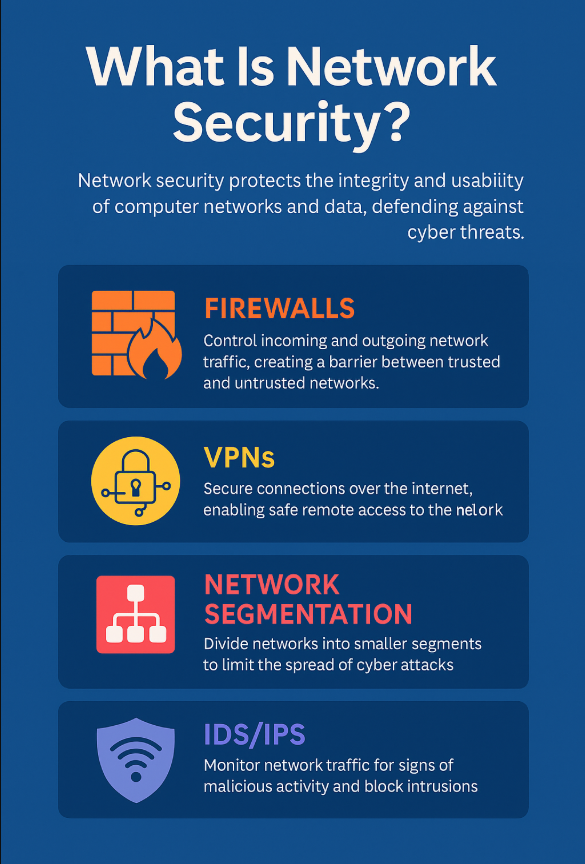
🧱 Common Networking Security Layers
- Firewalls – Control traffic entering and exiting your system
- Intrusion Detection/Prevention Systems (IDS/IPS) – Spot and stop threats
- Virtual Private Networks (VPNs) – Secure remote access
- Network Segmentation – Limit lateral movement of threats
- DNS Filtering – Block malicious sites before users reach them
🌐 Why Networking Is Core to Cybersecurity
Every cyberattack — from phishing emails to ransomware — involves network activity. That’s why networking is critical to:
- Monitoring suspicious behavior (e.g., login attempts from new locations)
- Detecting intrusions in real-time
- Segmenting traffic to limit the spread of attacks
- Enforcing access control so only the right users touch sensitive systems
🤖 Emerging Trends: Smarter Networks, Smarter Threats
- AI-driven intrusion detection now simulates human attackers, like in a Wired experiment where bots probed websites automatically.
- Read the article →
- Zero Trust Networking is replacing the traditional “trust but verify” model. It requires every device and user to be verified constantly — even inside the firewall.
- 5G networks introduce new challenges with speed, scale, and expanded entry points.
- Explore 5G security research →
⚠️ The Human Factor Still Matters
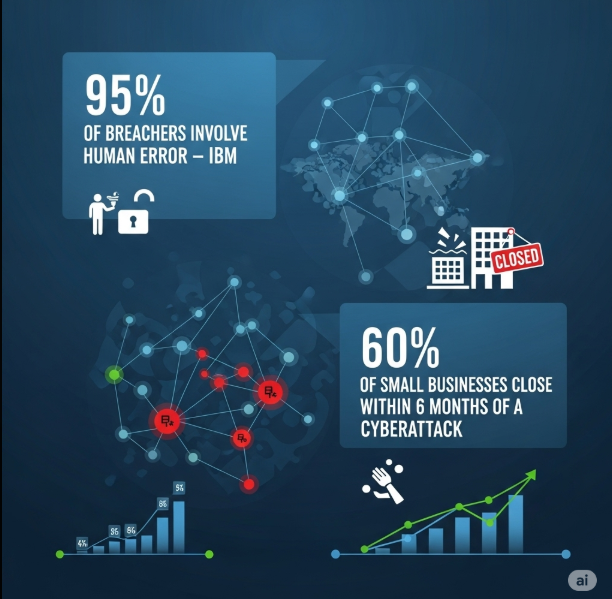
Network security isn’t just about technology — it’s also about people. Misconfigurations, burnout, or rushed decisions often create the openings hackers need.
🔥 “Burnout is becoming one of the biggest threats to security because tired teams forget basics like patching or logging.
✅ Key Takeaways
- Networking is the foundation of your security posture.
- Security tools like firewalls, segmentation, and IDS protect your network — but only if configured correctly.
- Monitoring traffic helps you detect and respond to threats early.
- Zero Trust and AI detection are reshaping how we defend systems.
- Human discipline and awareness are just as important as tech.


